Strength & Performance

A basketball player accelerates toward the basket, stops, and changes direction. A volleyball player moves into position, jumps, lands, and prepares for the next play. These actions depend on sport skills and the physical ability to carry them out.
Strength training can help athletes build that physical foundation. For young athletes, the priorities are good instruction, appropriate progression, and training that fits their stage of development.
The National Strength and Conditioning Association reports that a properly designed and supervised resistance-training program can improve muscular strength and power in youth. Those qualities are relevant to the demands of both court sports.
For basketball, consider the push into a first step or the effort of going up for a rebound. In volleyball, consider the takeoff for a block or attack. Building strength supports the physical side of these movements, while sport practice develops the timing and technique needed to use it.
Sports performance training also gives athletes a place to work on body control. Jumping is only part of the action; landing and getting ready to move again matter as well. So do slowing down and changing direction.
At O3, our volleyball strength and conditioning clinics include strength and stability, jumping and landing mechanics, speed and agility, and work for the ankles, knees, shoulders, and core. Training is adjusted to the athlete’s age and ability, with an emphasis on technique.
A well-coached session should meet athletes where they are. Resistance can come from body weight, bands, or external weights. The right starting point depends on the athlete’s experience and ability to follow instructions and perform the movement.
Quality supervision and gradual progression are central to the NSCA’s youth-training guidance. Athletes should learn the movement before increasing its difficulty. Progress can mean better control or more consistent technique, as well as greater strength.
Practice, games, tournaments, and strength sessions all contribute to an athlete’s workload. Share that schedule with the coach so training and recovery can be considered together. Long-term athletic development calls for individual progression and adequate rest, especially as young athletes grow.
Well-designed training may help reduce sports-related injury risk, but no program can guarantee an injury-free season or a particular jump or speed improvement.
Tell us your athlete’s sport, training experience, and goals. We can help identify a current strength or sports performance option, or discuss whether an assessment would be a useful first step.
Explore O3 Strength options or contact us about athlete training.
Further reading: NSCA: Strength and Conditioning Information for Parents and NSCA: Youth Training and Long-Term Athletic Development.
O3 News

Add O3 to your Home Screen with simple Safari and Chrome instructions for iPhone and Android, plus a QR code to open the registration portal.
READ MORE ➜O3 News

Explore O3’s new program finder, featured programs, social feed, and news section, plus our new SparvOS-powered registration experience.
READ MORE ➜Volleyball

A practical guide to comparing volleyball clubs, understanding team levels, and asking the right questions about coaching, costs, travel, and athlete development.
READ MORE ➜O3 News
Explore O3’s basketball and volleyball Academy, who it serves, and how memberships and session packages fit into an athlete’s routine.
READ MORE ➜Strength & Performance
Learn how strength, power, and movement training can support court athletes, with technique and age-appropriate coaching at the center.
READ MORE ➜Strength & Performance
A closer look at Coach Steve Koski’s assessment, including video analysis, a summary of findings, and drills athletes can practice independently.
READ MORE ➜O3 News

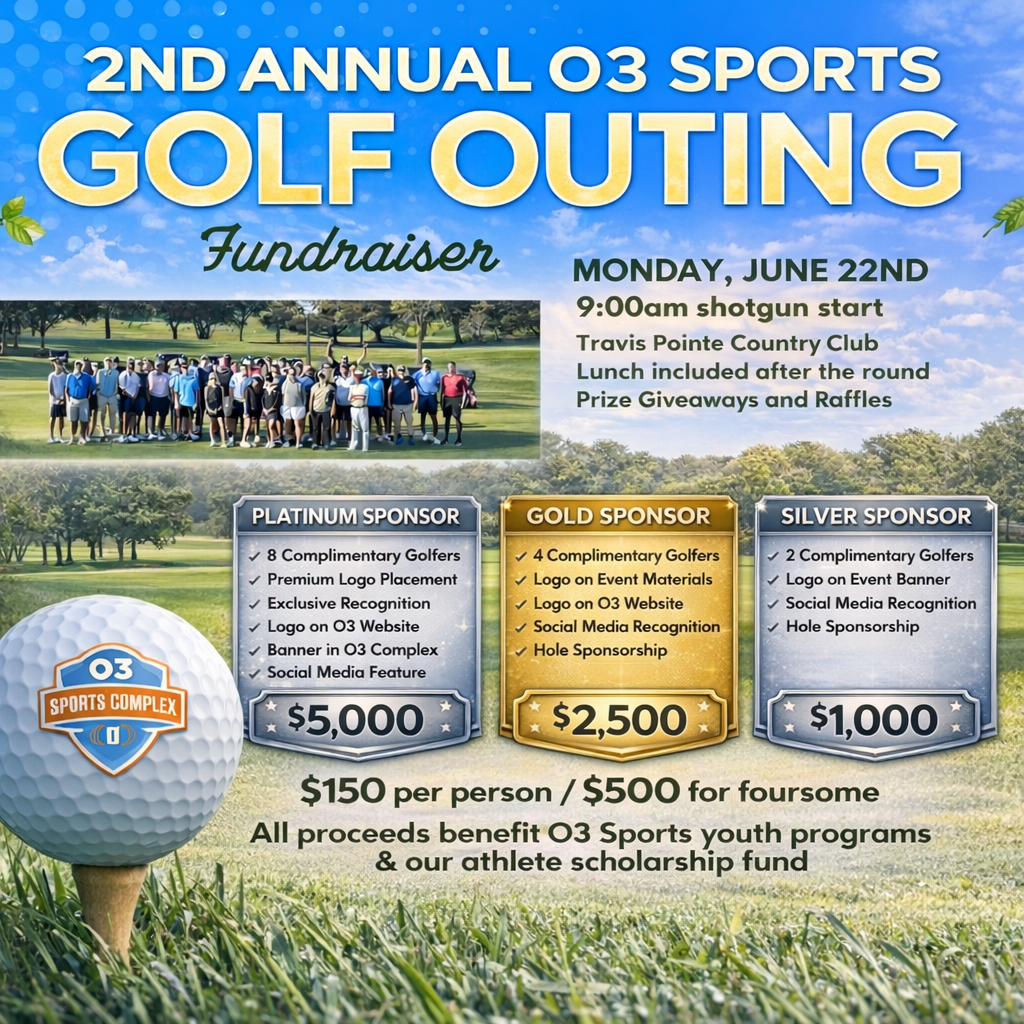
Join us for our O3 Golf Outing 2025! This is a chance to help donate to our Scholarship Fund to ensure all players have an opportunity to play the sport they love!
READ MORE ➜Basketball

As October ends we have finished our Player Development Program ...
READ MORE ➜Basketball

Meet Hutson Hohlbein and see WHY he chose The Academy by O3, and WHERE he is going from here!
READ MORE ➜Basketball

My mission is to share my philosophy of safe, purposeful and productive training with as many players and coaches as possible. I want to be a global authority on improving basketball athleticism.
READ MORE ➜October 26, 2026
©2026 O3 Sports
All Rights Reserved
Keep programs and registration a tap away.
Scan to open the portal, then add it to your Home Screen.